




















































Driven by the growing prevalence of high-value Brainrots—characterized by their scarcity and the increasingly intense demand for them—the trading economy within Steal a Brainrot is currently experiencing a surge of rapid growth. The developers are currently weighing the possibility of introducing a game-exclusive currency to facilitate in-game trading; however, for a title that has already been established for a year, such a move would undoubtedly constitute a monumental change. Questions regarding the timing and method of the new currency's introduction—as well as how Brainrots would be priced and where players could utilize the tokens—have suddenly become pressing issues. This article explores the hypothetical introduction of such Tokens, examining from various angles how the game might evolve following their implementation and offering guidance on how players should adapt to these changes.
The Current Trading System
In May 2025, Steal a Brainrot launched on the Roblox platform. Centered around the core gameplay mechanic of stealing other players' Brainrots, the game quickly garnered a large and enthusiastic player base. Initially, players engaged in direct theft; if they wished to conduct a peaceful exchange, they had to coordinate in advance—agreeing to simultaneously steal each other's Brainrots within the game to complete the trade. However, this method carried significant risk; there was no guarantee that the other party was acting in good faith, as they could easily steal your item and immediately leave the server, vanishing without a trace.
On February 22, 2026, the developers introduced the Trade Machine—a device allowing two players to securely exchange Brainrots. This innovation drastically improved the chaotic situation caused by the previous theft-as-exchange system, providing a robust safeguard for players' in-game assets. However, since trade values were determined solely by mutual agreement between the parties involved—lacking any authoritative pricing standard—players unfamiliar with the true market value of specific Brainrots remained vulnerable to potential scams.
The subsequent addition of the Exist Count feature marked another significant improvement. This feature tracks the total global supply of every specific Brainrot across the entire game, providing essential data support for assessing rarity levels. The system has undergone continuous optimization and can now be accessed by players at https://existcount.42web.io/. The feature has enabled players to engage in Brainrot trading that is significantly safer, more reliable, and more transparent.
Also Read: Steal a Brainrot Backrooms Event Update — 5 New Brainrots
Definition and Mechanics of the Token
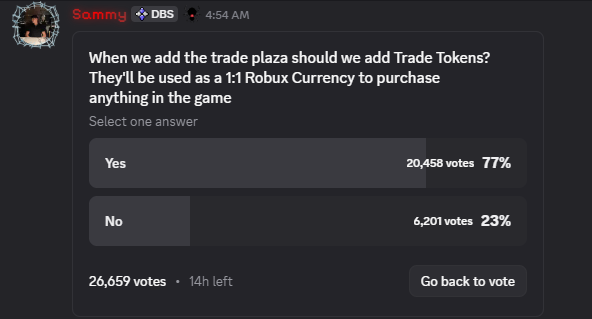
On May 21, 2026, developer SpyderSammy initiated a community-wide poll regarding the potential introduction of Trade Tokens—a currency pegged at an equivalent value to Robux. To date, the Yes votes in favor of this proposal have outnumbered the opposition. This vote sparked a lively debate within the community, as players began to speculate and envision the potential landscape that would emerge should Trade Tokens become a reality.
The concept of a Trade Token equivalent to Robux entails introducing a new, in-game currency within Steal a Brainrot specifically designated for player-to-player trading. This currency would maintain a fixed 1:1 exchange rate anchored directly to Robux. Drawing inspiration from the Trade Token mechanics utilized in Grow a Garden, this new token would likely be obtainable through the following methods:
- Direct Purchase via Robux: Players could purchase Trade Token bundles from the in-game store using Robux, maintaining the fixed 1:1 exchange rate.
- Earning via the Trading: Players could earn Trade Tokens by selling their Brainrots on the in-game trading marketplace. To promote the usage of Trade Tokens, the game may introduce a new machine or a dedicated trading server. Players could list their Brainrots on a marketplace, pricing them in Tokens; when other players make a purchase, the seller would receive the corresponding Tokens.
Drawing upon the fundamental economic principles of the Roblox platform—where Roblox monetizes via its virtual currency, Robux (which players purchase to acquire in-game items and experiences, with Roblox taking a revenue share)—the introduction of an equivalent Token essentially embeds this mature monetization logic into the secondary trading market of Steal a Brainrot.
Also Read: How to Get Boppin Bunny via code in Steal a Brainrot
Impact on the Game
A Unified Pricing System
Despite the existence of the Exist Count feature, the sheer variety of mutations, traits, and statuses within the game is so vast that a single type of Brainrot can command many different prices. Consequently, the trading market in Steal a Brainrot currently suffers from information asymmetry. Players engage in barter within the Trade Machine—using the Exist Count merely as a reference—resulting in highly fragmented valuations where opinions often diverge depending on the source.
The introduction of the Trade Token will fundamentally transform this landscape. Every Brainrot—regardless of its rarity, mutation, or total existence count—will acquire a quantifiable market price. When combined with the Exist Count feature, players will be able to track the fluctuating value of their assets much like one monitors stock market trends.
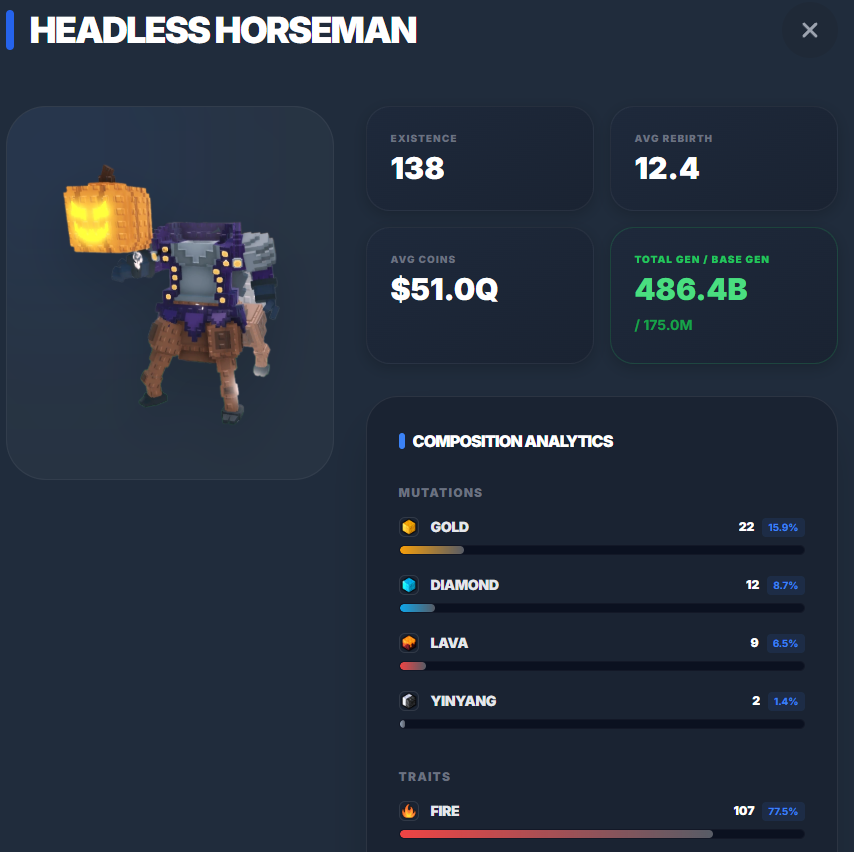
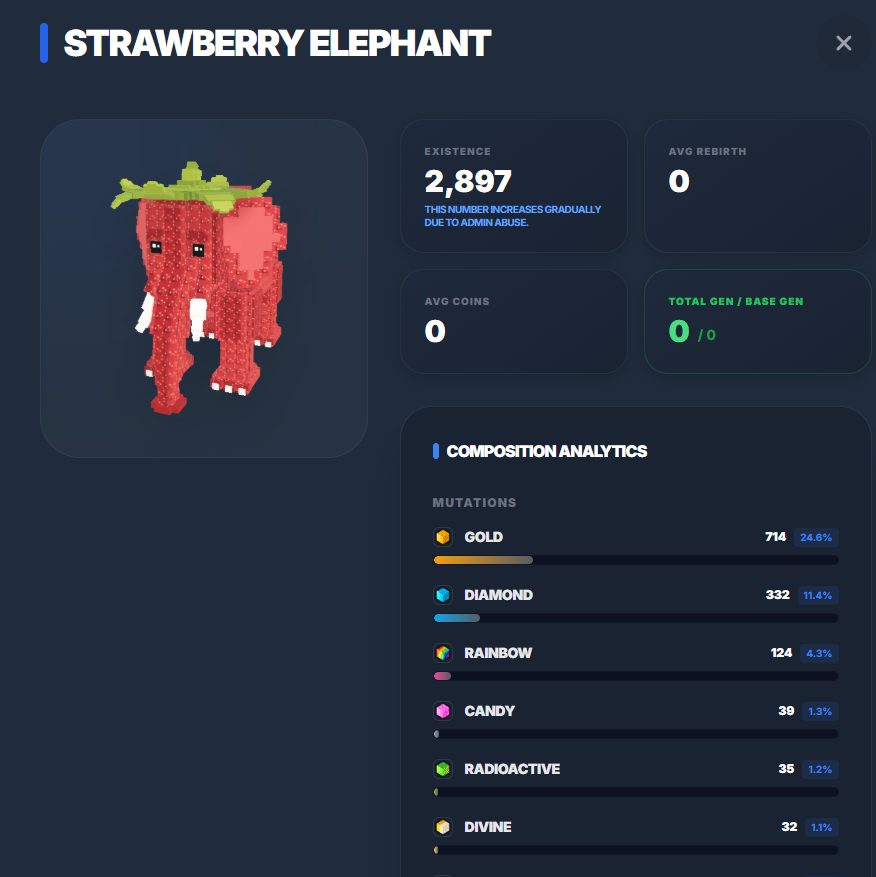
Example: There are only approximately 138 Headless Horseman in existence, about 2,897 Strawberry Elephant , while Trippi Troppi number a staggering 28 million. When these vastly disparate existence counts are paired with Token-based pricing, a stark price hierarchy will rapidly emerge: rare items could skyrocket to prices of thousands or even tens of thousands of Tokens, while common items might fetch as little as a single-digit number of Tokens.
Elevating the Status of the Trade Machine
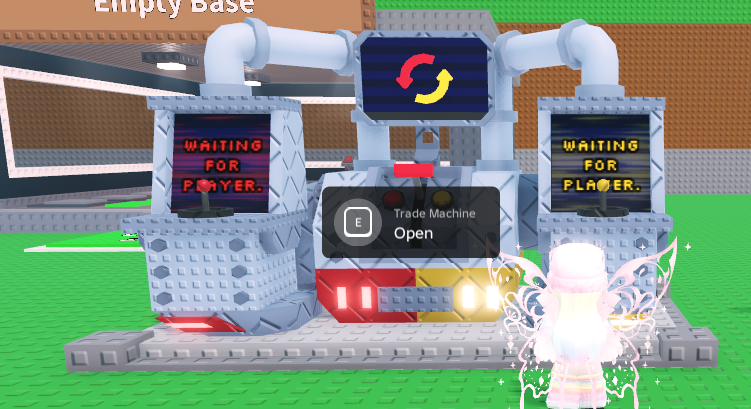
The Trade Machine is currently positioned as a secure intermediary device; its sole function is to ensure that the items deposited by both parties are not swapped or substituted, thereby preventing fraud. However, its functionality is fundamentally limited to item-for-item exchange rather than financial transaction settlement.
Should the Token go live, the Trade Machine is poised to undergo a significant functional upgrade: evolving from a mere barter platform into a comprehensive trading terminal capable of facilitating mixed transactions involving both Tokens and items. The Trade Machine would display the estimated market price (in Tokens) for a specific Brainrot; a player would then input the quantity of Tokens they are willing to pay; if the counterparty deems the offer acceptable, they would deposit the corresponding Brainrot; finally, following a dual-confirmation process, the transaction would be settled. Establishing a relatively transparent and low-risk trading environment.
Will a dedicated trading server be introduced?
This is a crucial question. One could look to Grow a Garden—specifically its dedicated trading zone—as a reference; there, players can set up stalls and list items for sale at specific prices. This model holds direct relevance for Steal a Brainrot; perhaps a dedicated entrance could be added near the Red Carpet area, leading players into a server strictly reserved for trading and purchasing. However, a high degree of direct imitation might displease players, who could perceive it as lacking originality. The developers should explore alternative approaches based on this foundation; after all, a purely trading-centric model could conflict with the steal a brainrot's core gameplay, potentially leading to dissatisfaction among some players.
Also Read: Top 10 Rarest Brainrots in Steal a Brainrot - Overview & How to Get(2026)
Pros and Cons Analysis
Positive Effects
- ✔ Significantly enhanced trading liquidity. The introduction of Trade Tokens ensures that trading no longer relies on both parties simultaneously possessing the specific items the other desires. Players can sell their Brainrots for Tokens at any time, and subsequently use those Tokens to purchase the Brainrots they want. This reduces the time required to match buyers and sellers, thereby boosting market efficiency.
- ✔ Establishment of a pricing mechanism. When combined with the Exist Count feature, the Token price for each type of Brainrot will serve as a real-time reflection of its rarity and market demand. These transparent price signals not only empower players to make more informed trading decisions but could also pave the way for the generation of related data—such as price trend charts and historical high/low prices—which can be used to illustrate and analyze market fluctuations for Brainrots.
- ✔ Protection of players' in-game assets. The Trade Machine has already utilized technical measures to minimize the risk of scams; if an official pricing feature is added on top of this, players will be able to clearly view the market reference price for every item prior to trading, thereby significantly reducing information asymmetry.
- ✔ Creation of a sustainable revenue stream for developers. If a small transaction fee (a percentage of the total value) is levied on every Token-based trade—much like in Grow a Garden—these accumulated fees will serve as a funding source for the development team, supporting the game's ongoing updates and maintenance. Furthermore, this directly increases the demand for Robux circulation, thereby benefiting the overall ecosystem of the Roblox platform.
Potential Risks
- ✖ Pay-to-Win Controversy. If Trade Tokens become the primary medium of exchange, players willing to spend real money—or pay premium prices—will possess significantly greater purchasing power, enabling them to aggressively acquire rare Brainrots within the trading market. Consequently, the prices of rare Brainrots could be driven artificially high due to intense bidding wars, effectively creating a Pay-to-Win advantage. If a game originally designed to reward skill and technical prowess devolves into a mere contest of financial spending, it risks losing its fundamental purpose and meaning.
- ✖ Speculative Risks Associated with Market Price Fluctuations. With the introduction of token-based pricing, speculative behavior is an inevitable outcome. Players may choose to hoard limited-edition Brainrots, waiting until supply dwindles or demand surges before selling them off at inflated prices. Drawing parallels with the pricing models of major third-party trading platforms—where values are largely determined by market demand and existing supply—price volatility is a constant factor. This same volatility is bound to manifest within the Trade Token system; short-term imbalances between supply and demand could trigger drastic price swings, thereby destabilizing the game's economy.
- ✖ Impact on Players. A significant proportion of the core player base in Steal a Brainrot consists of minors—given that approximately 40% of users on the Roblox platform are under the age of 12. When the value of a token becomes directly pegged to real-world currency, these young players are thrust into a virtual economic environment where money equals value. Witnessing other players spend hundreds or thousands of tokens to acquire a single Brainrot may foster feelings of unfairness and frustration among those who are slowly accumulating wealth through in-game earnings alone. Consequently, the game risks losing a large segment of its casual player base, leaving behind a demographic dominated by heavy spenders. Without the contrast provided by a diverse player base, even these heavy spenders may eventually find the game unengaging; this could potentially lead to collective backlash, with players demanding refunds for their tokens.
Developers must thoroughly deliberate these potential pitfalls before officially introducing Trade Tokens. Possible mitigation strategies include restricting the rarity levels of Brainrots available for sale, limiting the number of purchases a single player can make, or imposing price caps on Brainrots. There are always more solutions than problems; we are confident that the development team will deliver a satisfactory resolution to these challenges.
Projected Launch Timeline
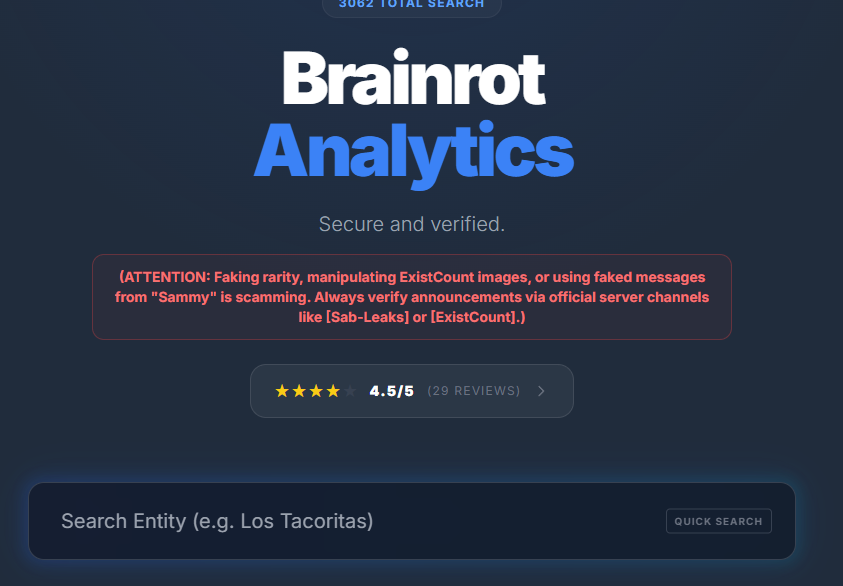
- Prerequisites Are Already in Place. The Trade Machine feature went live on February 22, 2026, and the community has already engaged in discussions regarding the possibility of making it a permanent fixture. Exist Count—a feature displaying the total supply of specific items—has been included in the development roadmap; although not yet fully integrated into the game itself, a dedicated website is already available for players to check these figures. This demonstrates that the developers are systematically and methodically building out the game's trading infrastructure.
- Logical Progression: Trade Machine → Exist Count → Trade Token. If we view the Trade Machine as the foundational layer for trading security, and Exist Count as the informational layer for value assessment, then Trade Token represents the monetary layer for transaction settlement. Together, these three elements constitute a complete trading ecosystem. With the first two layers currently in either the development or discussion phase, the introduction of the third layer represents a logical and natural extension of this process. Furthermore, the Trade Token system utilized in Grow a Garden has already been validated by the market; porting this proven model to Steal a Brainrot represents a strategic decision with low technical overhead and high potential returns.
However, the developers have opted to first monitor usage data for the Trade Machine, gather community feedback, and await the results of today's vote before making a final decision on whether to introduce the tokens. Moreover—given the various preparatory steps required—the introduction of equivalent tokens entails complex compliance considerations—particularly regarding transactions involving real-world monetary value where minors are involved—which may necessitate a more extended preparation period. Consequently, the earliest possible timeframe for the token launch would likely be the third or fourth quarter of 2026, or potentially early 2027 if the process takes longer.
Also Read: How Many Dragon Cannelloni Exist in Steal a Brainrot?
How Players Should Respond
Exercise Caution Regarding Early Market Pricing
The launch of any new economic system inevitably involves a transition period; during the initial weeks following the token system's rollout, the market may be rife with irrational pricing. Prices may fluctuate wildly—either soaring or plummeting—so players are advised to adopt a wait-and-see approach during this phase. Leverage Exist Count data and information gathered from various community channels to accurately assess the true rarity and market demand for specific Brainrot items, and refrain from rushing into large-scale transactions.
Diversify Risk; Avoid Concentrated Hoarding
Should the launch of the token system trigger a speculative frenzy, players should avoid betting their entire assets on a single type of Brainrot. Market prices are influenced by a multitude of factors—including new developer-initiated events, an increase in mutation occurrences, and shifts in community preferences—all of which can alter the market value of a specific Brainrot. Players are encouraged to diversify their collections and pursue a more prudent, balanced strategy.
Prioritize Trading Security
Although the Trade Machine has been enhanced through technical means to bolster transaction security, the fungibility of the tokens may inadvertently foster an increase in over-the-counter (OTC) trading—where players bypass the in-game system to conduct direct exchanges of tokens and items via external platforms. Such transactions fall outside the protective scope of the game's internal mechanisms and carry an extremely high level of risk; players are strongly advised against placing their trust in such arrangements.
Approach the Monetary Value of Tokens Rationally
It is crucial to note that a clear conversion pathway exists between Robux and real-world currency; this implies that the equivalent tokens within the game also possess a corresponding tangible economic value. Players—particularly minors—must recognize that spending in-game tokens is, in essence, equivalent to spending real money; therefore, they should plan their expenditures rationally and avoid making impulsive purchases.
Also Read: Steal a Brainrot Taco Tuesday & Update Time – Full Admin Abuse Schedule 2026
Final Thoughts
Regardless of whether the developers ultimately implement this feature, as trading activity, the concept of rarity, and market demand assume increasingly prominent roles within the game, Steal a Brainrot’s economic system is steadily evolving toward a more mature and sophisticated, trade-centric future. It is hoped that the developers will carefully weigh the pros and cons to design a monetary system that suits the broad player base, thereby elevating the game to new heights.