





























































Steal Fish Eggs looks simple the first time you jump in: grab an egg, swim home, repeat. The part nobody explains clearly is why some runs end with a full tank and others end with an empty pen and a lost egg. This guide walks through the actual core loop, a safe first-run routine, how to deal with the fast fish guarding every nest, and which upgrades actually move the needle for a new player.
The Steal Fish Eggs loop is: steal an egg → drop it in your tank → hatch your pet → put the fish back in your tank → collect your reward. Once that cycle feels smooth, spend early coins on a tail for extra swim speed, then split the rest between a pool upgrade (faster training) and a tank upgrade (more fish, more coins), and only turn to the Fuse Machine once you have spare fish worth combining.
The Core Steal Fish Eggs Loop
Everything in Steal Fish Eggs runs through the same five-part loop, and understanding it up front saves you a lot of wasted trips.
1. Steal a fish egg. Swim to a nest and pick up an egg. This is the easy part, the timing and escape afterward is where runs actually go wrong.
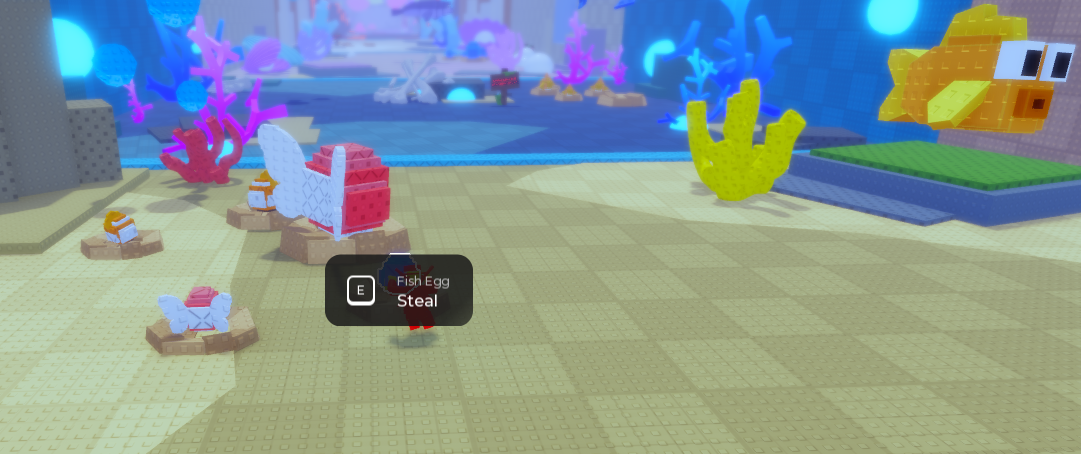
2. Drop it in your own tank. The egg only counts once it's safely inside your personal tank.
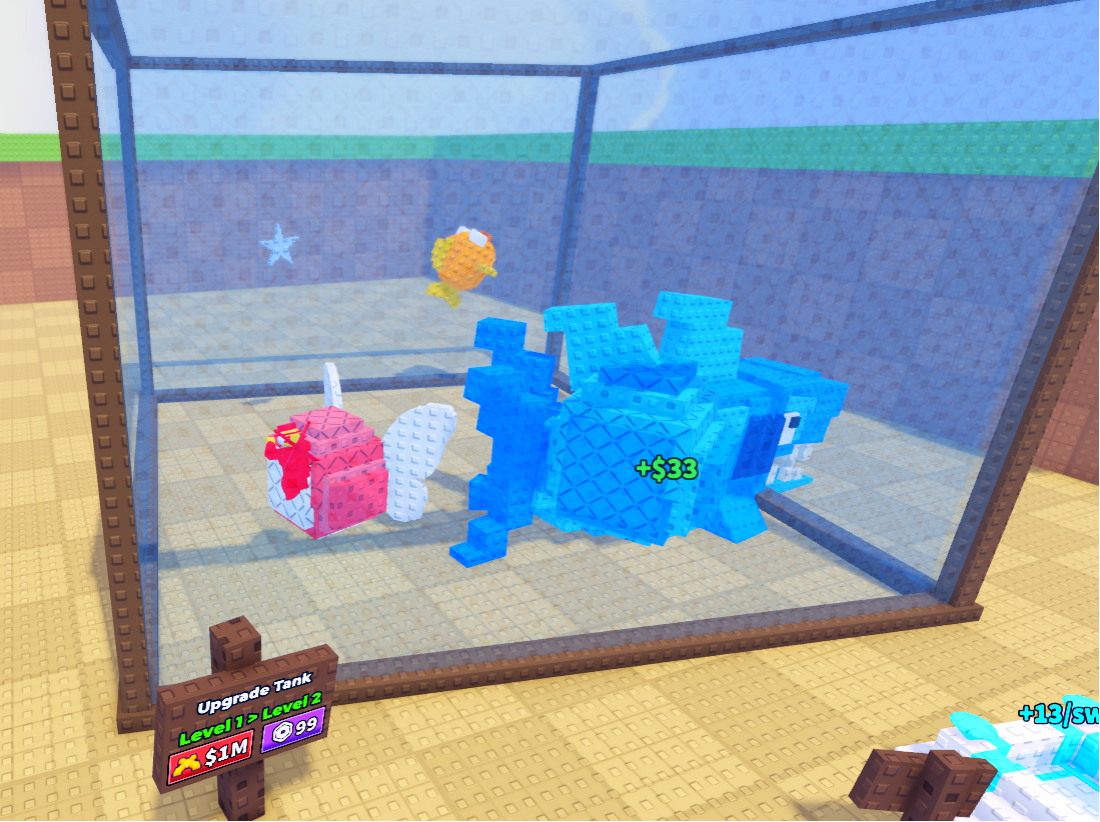
3. Hatch your pet. Once the egg is secured, hatch it. This is what turns a stolen egg into an actual asset.
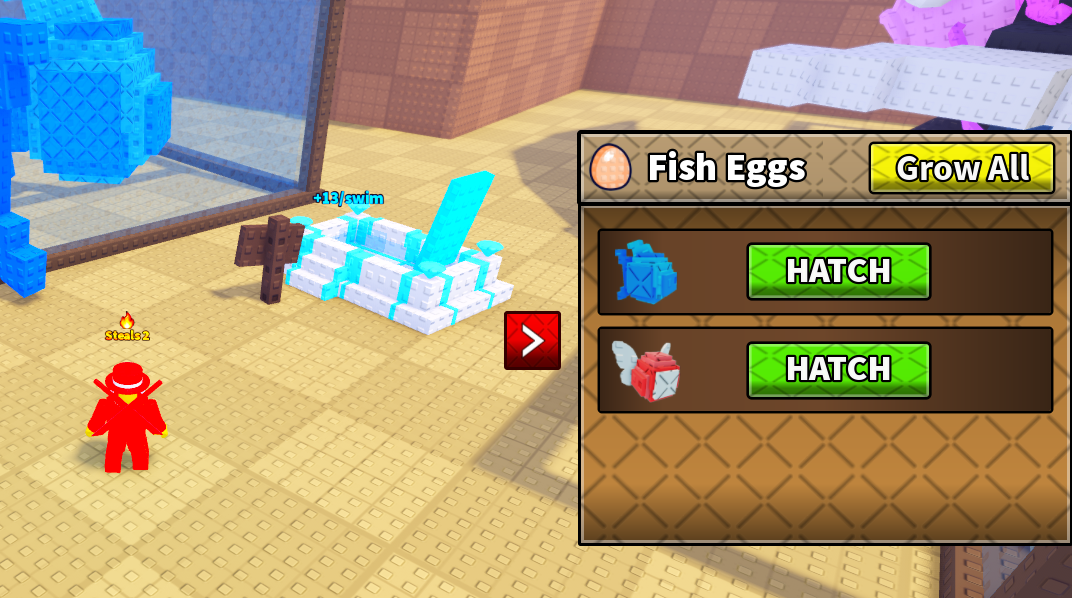
4. Put the fish back into your tank. After hatching, the resulting fish goes back into your tank so it can keep contributing to your setup.
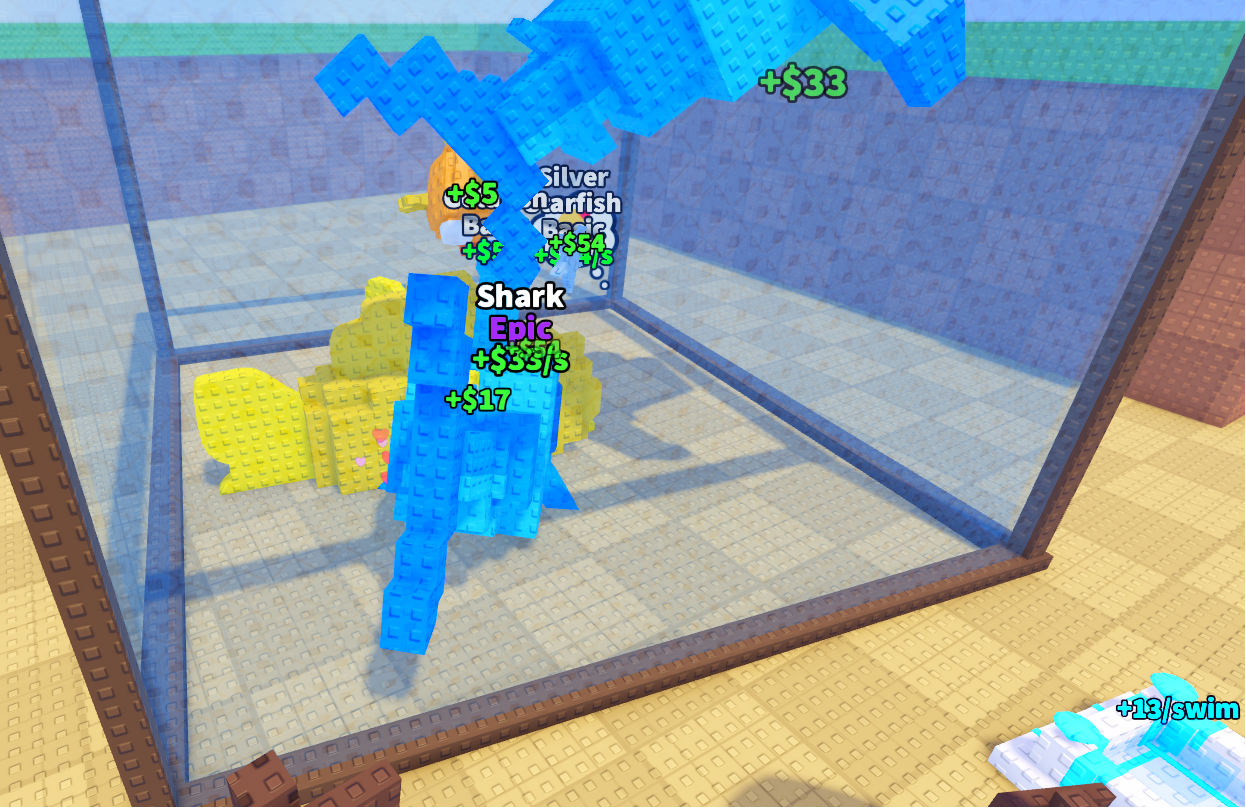
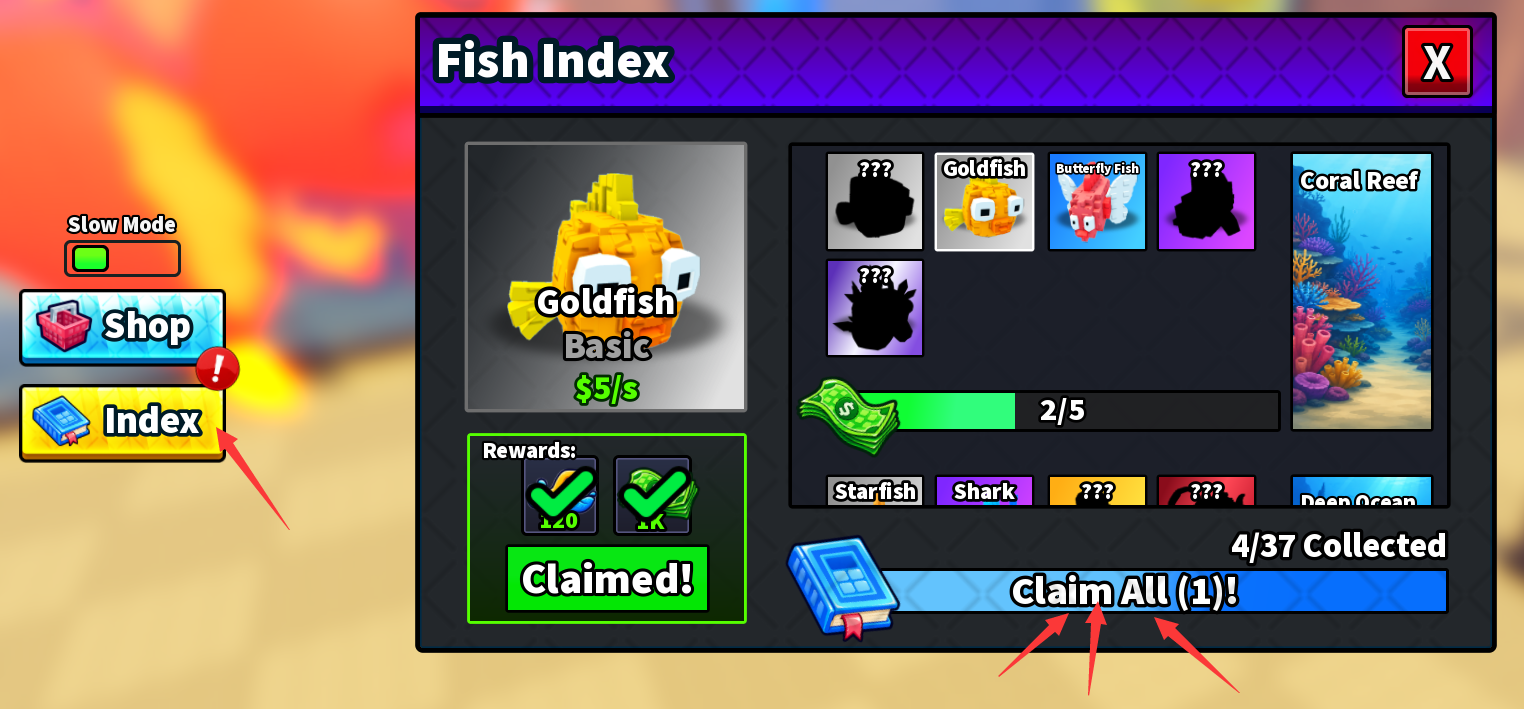
5. Claim your reward. Only now do you bank the actual payout for the run. Skipping this step is one of the most common ways beginners waste a good run.
Your First Egg Run
If you're brand new, don't start with the nest that looks the most impressive. Start with whichever nest gives you the clearest, straightest swim back to your tank, and use that first run purely to learn timing.
Pick a Nearby, Low-Pressure Nest
Choose an egg close to your tank with an obvious swim-back path. Don't chase the biggest or rarest-looking egg on your very first attempt.
Watch the Guardian Before You Move
Pause and watch how the fast fish guarding the nest patrols. Most nests have a predictable pattern, wait for it to swim away before committing.
Grab the Egg and Go Immediately
Once you take the egg, don't linger to look around. Head straight for your tank using the route you already scouted.
Drop the Egg in Your Tank
The run isn't finished until the egg is physically in your tank. A guardian catching you a few feet from home still counts as a lost egg.
Hatch, Return, and Claim Before Repeating
Hatch the pet, put the resulting fish back in your tank, and confirm your reward before you swim off toward the next nest.
Dealing With Fast Fish Guardians
Every nest worth visiting is watched by a fast fish, and it's almost always faster than you at the start of the game. That means your survival tool isn't outrunning it in a straight line, it's using turns, obstacles, and timing to make its pursuit harder than it needs to be.
| Situation | Better Response | Common Mistake |
|---|---|---|
| Guardian is facing the nest | Wait a few seconds for it to turn away | Grabbing the egg the moment you arrive |
| Guardian starts chasing you | Cut around a rock, coral cluster, or tank wall | Swimming in a straight open line |
| Your swim-back path is narrow | Scout a wider secondary route beforehand | Committing to the egg with no backup path |
| You're carrying a large egg | Take the calmer, longer route instead of the short one | Assuming size doesn't affect your speed |
| You almost got caught last time | Note exactly where it happened and change that part of the route | Repeating the identical route and hoping for better luck |
How to Actually Make Money
Coin income in Steal Fish Eggs comes from completing the loop consistently, not from one lucky grab. A modest egg that you reliably bank every time beats a huge egg you lose half the time, simply because the small, repeatable run compounds faster over a session.
Upgrade Priorities In Steal Fish Eggs
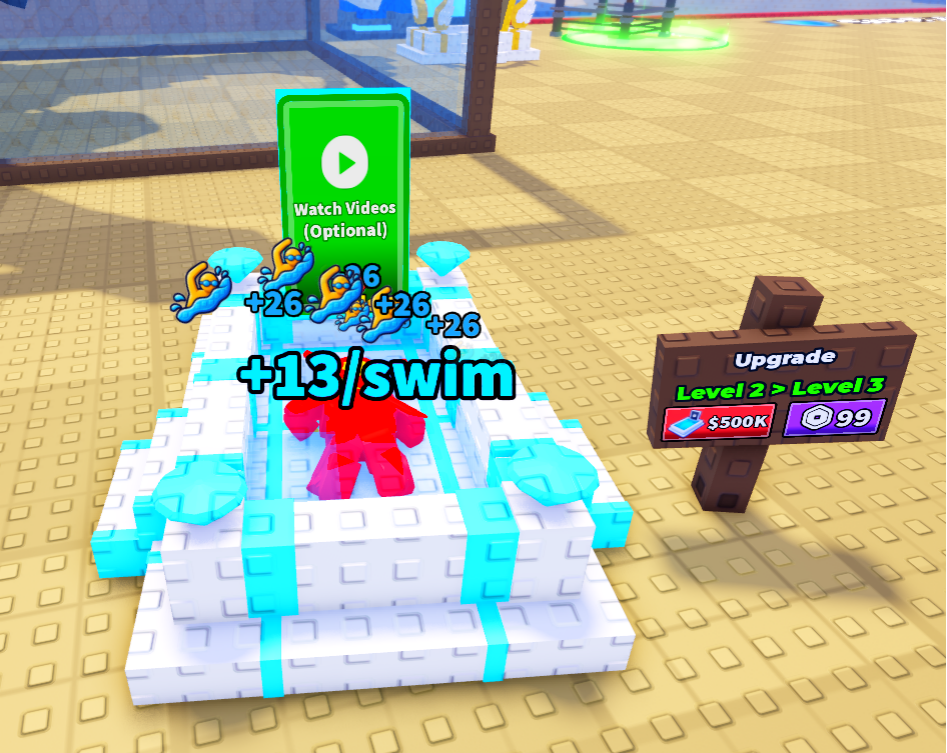
New players often buy upgrades in whatever order they're listed in the shop. A better approach is to diagnose which stage of your loop is actually slowing you down, then spend on that specific stage.
Buy this first if you're regularly losing eggs to the guardian on the swim home. More speed directly widens your safety margin on every run.
Upgrading your pool increases your training speed, and it also determines how far you can travel across the water zones.
A bigger tank houses more fish at once, which means more coin generation between shopping trips instead of your progress capping out early.
Use this once you have duplicate or lower-value fish sitting around, fuse them together to produce a fish with a better rate instead of leaving them idle.
Which Eggs Should You Even Bother Taking?
Not every egg is worth the risk of the swim home. Weigh the egg against the route you'll need to survive, not just its apparent size or rarity.
| Egg Type | Upside | Trade-off |
|---|---|---|
| Small, nearby egg | Fast, low-risk, great for learning a route | Lower individual payout |
| Medium egg, clear path | Solid balance of value and safety | Still needs a scouted escape route |
| Large, distant egg | Highest potential value per run | Slower to carry, easier for the guardian to catch |
A practical habit: treat the first egg of any session as a scouting run. Take something small and manageable, confirm the guardian's pattern hasn't changed, and only then decide whether a bigger target on that route is worth the risk today.
Beginner Mistakes to Avoid
- Grabbing the egg before watching the guardian's pattern at all
- Swimming home in a straight, predictable line instead of using turns
- Chasing a second egg before confirming the first one's reward
- Spending every early coin on the flashiest upgrade instead of the actual bottleneck
- Carrying a large egg through a route you haven't tested with a smaller one first
- Camping a single nest instead of rotating between a few known spots while it resets
FAQ
What is the basic Steal Fish Eggs loop?
Steal an egg, put it in your tank, hatch your pet, return the fish to your tank, then claim your reward before starting another run.
Is a bigger egg always the better choice?
No. A bigger egg is only a good pick if your current speed and route can actually get it home.
What does the Fuse Machine do?
It lets you combine fish you already own into a single fish with a better rate.
How do I avoid losing eggs to the guardian fish?
Watch the guardian's patrol before committing, take the egg only when your escape path is clear, and break line of sight using turns or obstacles.
How often do nests refresh?
Nests reset on a short cycle, so rotating between a couple of familiar nests is more efficient.