

















































⚡ Quick Answer
The published August 2026 Stress Test 3 ranking puts the 7'2" 2-Way Post-Up Contributor Center in S Tier. The 6'9" Crafty Walking Bucket SF and 6'2" Thieving Floor-General PG appear in A Tier. This is not a verified November Alpha meta.
On this pageJump to section ↓
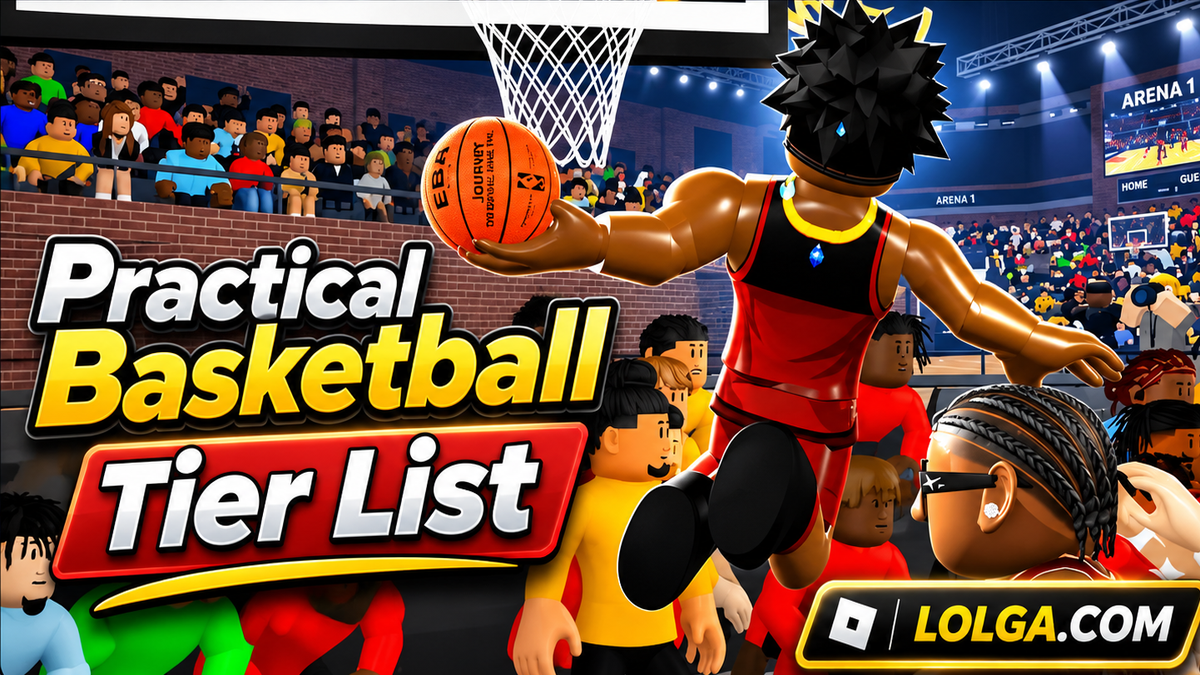
Practical Basketball Tier List – S to C Rankings
Practical Basketball's builds are defined by position, height, physical attributes, shooting, handling, defense, badges and Takeovers. That means ranking every player with a single tier letter is always an approximation.
The most concrete publicly documented tier list we could verify is an August 1, 2026 Stress Test 3 ranking. It is reproduced below with its original historical context. The game moved into Alpha on October 30, 2026, so this list is not proof of today's strongest build.
| Historical tier | Named build | Position | Strength |
|---|---|---|---|
| S | 7'2" 2-Way Post-Up Contributor | Center | Interior scoring and defense |
| A | 6'9" Crafty Walking Bucket | Small Forward | Athletic two-way play |
| A | 6'2" Thieving Floor-General | Point Guard | Speed and ball creation |
| B | 6'6" Crafty Offensive General | Shooting Guard | Perimeter scoring |
| C | 6'10" Built Power Forward | Power Forward | Specialized frontcourt play |
Do not confuse versions: The tier labels above describe one documented test-era evaluation. New Alpha animations, scoring systems and possible balance updates can reorder these builds. Use the ranking as a comparison of playstyles, not a current guaranteed win-rate chart.
S Tier – 7'2" 2-Way Post-Up Contributor (Center)
The strongest build in the historical list is a physical 7'2" Center that pairs post scoring with high-end interior defense.
| Attribute | Reported value |
|---|---|
| Height / weight | 7'2" / 255 lbs |
| Post Control | 90 |
| Interior Defense | 90 |
| Block / Rebound | 90 / 90 |
| Strength | 93 |
| Mid-Range / Three-Point | 81 / 81 |
| Takeover | Diesel |
Why it ranked S: Strong post control and physical attributes can make a large Center difficult to stop close to the basket. Defensive ratings and rebounding also offer value when the Center is not scoring.
Potential weakness: Smaller, quicker opponents can be difficult to guard if they consistently pull the Center into open perimeter space. An older post-scoring setup may also be affected by Alpha changes.
Best fit: Players who enjoy physical scoring, interior defense, rebounding and slower half-court possessions.
A Tier – 6'9" Crafty Walking Bucket (Small Forward)
This athletic Small Forward ranked highly because it combined scoring ability with effective wing defense.
| Attribute | Reported value |
|---|---|
| Height | 6'9" |
| Driving Dunk | 89 |
| Perimeter Defense | 96 |
| Lateral Speed | 92 |
| Vertical | 89 |
| Takeover | Highlight Reel |
Why it ranked A: This style of player can defend perimeter threats, finish on drives and cover several responsibilities without being limited to one specialty.
Potential weakness: Balanced wings may have lower elite caps than a pure shooter, elite playmaker or interior specialist.
Best fit: Players who value two-way play and want to contribute across 3v3 and 5v5 situations.
A Tier – 6'2" Thieving Floor-General (Point Guard)
The historical list also favors a speedy Point Guard with strong outside shooting and ball control.
| Attribute | Reported value |
|---|---|
| Height | 6'2" |
| Speed | 98 |
| Acceleration | 95 |
| Lateral Speed | 94 |
| Three-Point Shot | 93 |
| Ball Handle | 90 |
| Takeover | Smooth Operator |
Why it ranked A: Excellent movement and ball handling can help create space for a shot or draw defenders away from teammates.
Potential weakness: A small guard may have trouble with physical matchups, rebounding and rim contests. High ball-handling skill is also needed to get its full value.
Best fit: Players who enjoy quick dribble sequences, playmaking and perimeter offense.
B Tier – 6'6" Crafty Offensive General (Shooting Guard)
The 6'6" Shooting Guard in the old ranking emphasized perimeter offense instead of balanced versatility.
| Attribute | Reported value |
|---|---|
| Height | 6'6" |
| Three-Point Shot | 96 |
| Mid-Range Shot | 90 |
| Perimeter Defense | 85 |
Why it ranked B: Strong shooting made the build useful when teammates could create open looks, but it offered fewer dimensions than some higher-ranked combinations.
Potential weakness: Overreliance on jumper timing and spacing. If defenders remove open shots, a more rounded build may have more solutions.
Best fit: Players who enjoy movement shooting and playing off the ball.
C Tier – 6'10" Built Power Forward
The historical C-tier Power Forward was comparatively specialized and did not offer the same all-around offensive pressure as the top-ranked builds.
Why it ranked lower: The evaluation saw fewer reliable self-created scoring options and less versatility compared with the leading Center and Small Forward.
Does C Tier mean unusable? No. Team needs matter. Screens, rebounds and defensive positioning can make a frontcourt specialist useful, especially when teammates already provide ball handling and shooting.
Best fit: Players comfortable with supporting roles rather than relying on constant isolation scoring.
Which Build Type Is Best for Your Playstyle?
The historical list should not decide your position by itself. Use role-based comparisons as a starting point:
| Playstyle | Build type to explore |
|---|---|
| First-time all-rounder | Balanced Small Forward |
| Three-point shooter | Shooting Guard |
| Main ball handler | Point Guard |
| Post offense | Physical Center |
| Rebounding and paint defense | Defensive Center |
| Finishing plus defensive help | Power Forward |
For exact position templates, see the Practical Basketball Best Builds guide.
Do Rankings Change by Game Mode?
1v1 – Isolation and defense
In 1v1, you must create your own shot and guard the opponent yourself. Passing-first strengths have limited value, while speed, reliable scoring and individual defense matter more.
2v2 – Complementary roles
A scorer next to a rebounder or versatile defender can be more productive than two identical builds competing for the same shots.
3v3 – Spacing and versatility
Enough shooting to spread the floor, quick decisions and flexible defense become important. Small Forward-style all-around builds are worth considering.
5v5 – Complete team structure
A traditional team needs playmaking, perimeter offense, wings, rebounding and paint protection. A build's usefulness depends on the other four players and your ability to fulfill the assigned role.
What Could Change the Alpha Tier List?
Animation access. If a particular shooting, dunk or dribble animation becomes easier or harder to unlock, a build may gain or lose effectiveness.
Badges and Takeovers. Threshold adjustments can change the best attribute allocation even when the player's position remains the same.
Defense and stamina. Changes to contests, movement and stamina can especially affect small guards and oversized Centers.
Real match evidence. A proper November Alpha tier list should be based on actual current-version player builds and repeated tests across modes, rather than one outdated screenshot.
How to Choose Without Overvaluing the Tier
- Pick the role you find enjoyable: shooter, handler, wing, defender or big.
- Inspect available caps in the live My Player builder.
- Prioritize attributes that unlock the badges or animations you need.
- Practice shot timing and defense with that build.
- Compare how it performs in your preferred match format.
A skilled B-tier shooter may contribute more to a well-organized team than an S-tier build that the player does not understand.